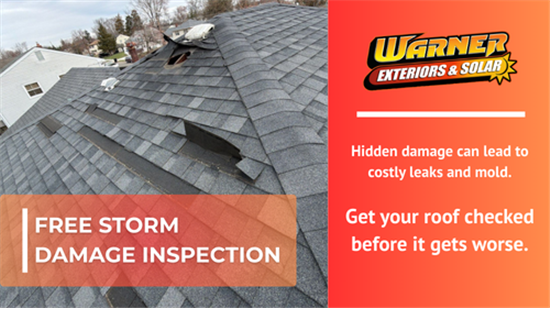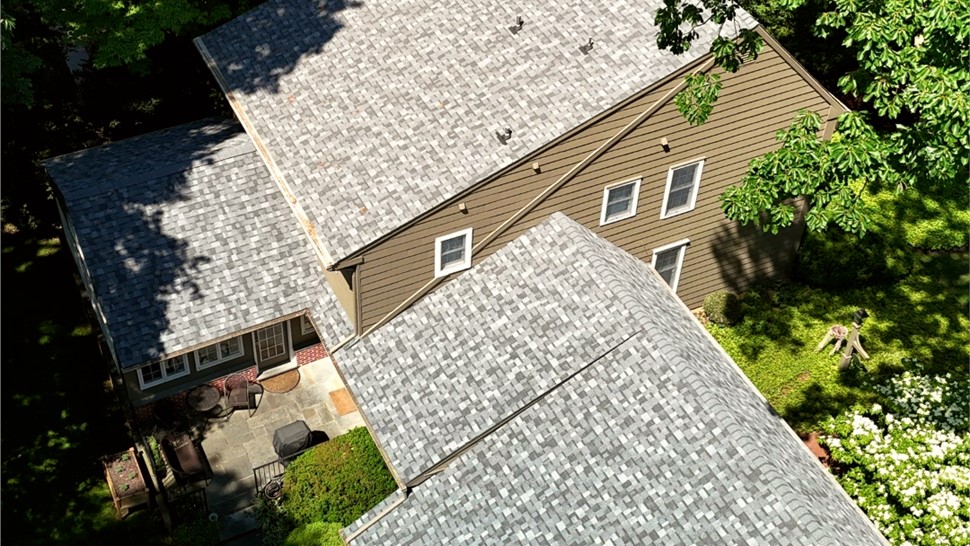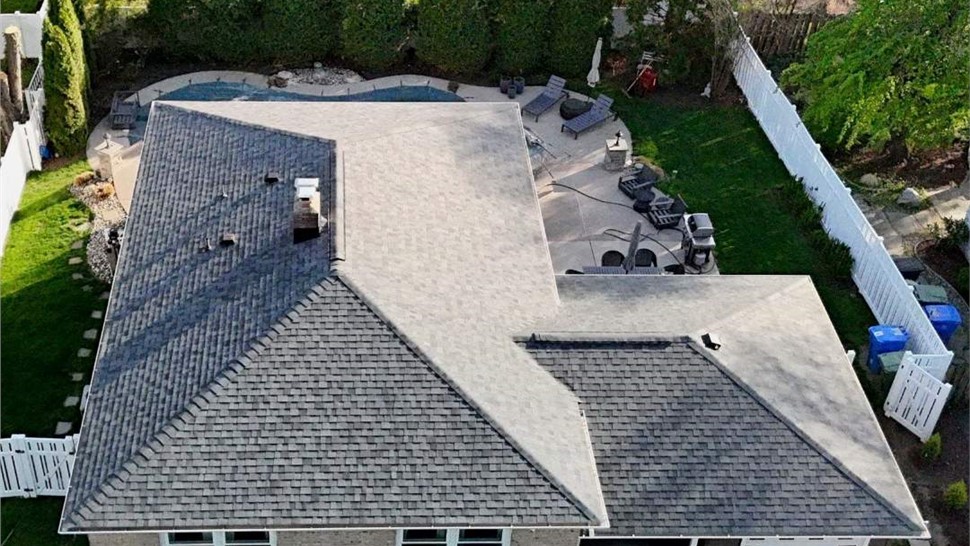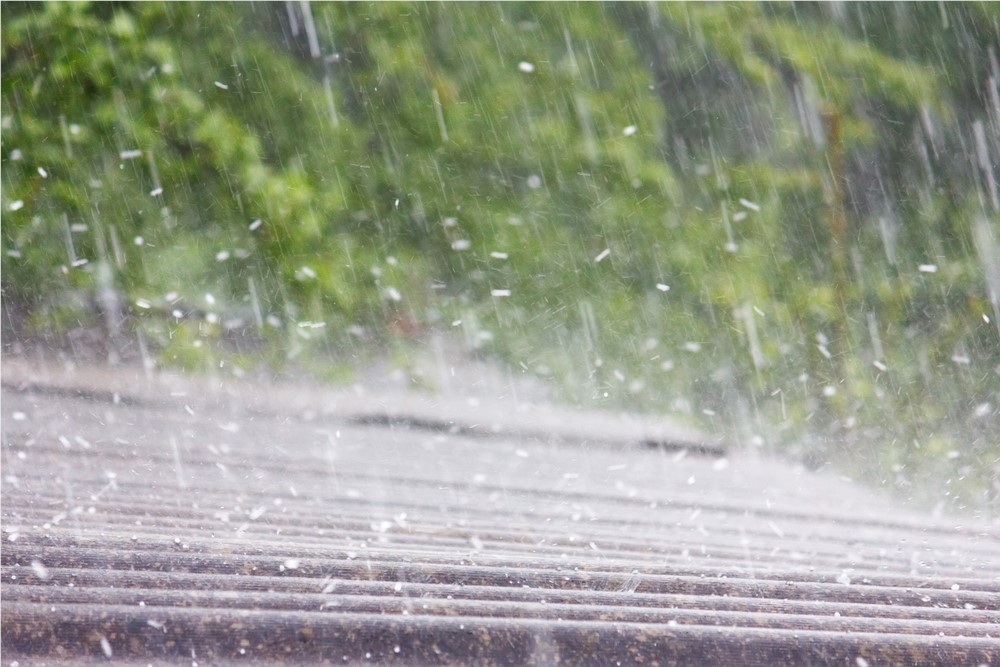

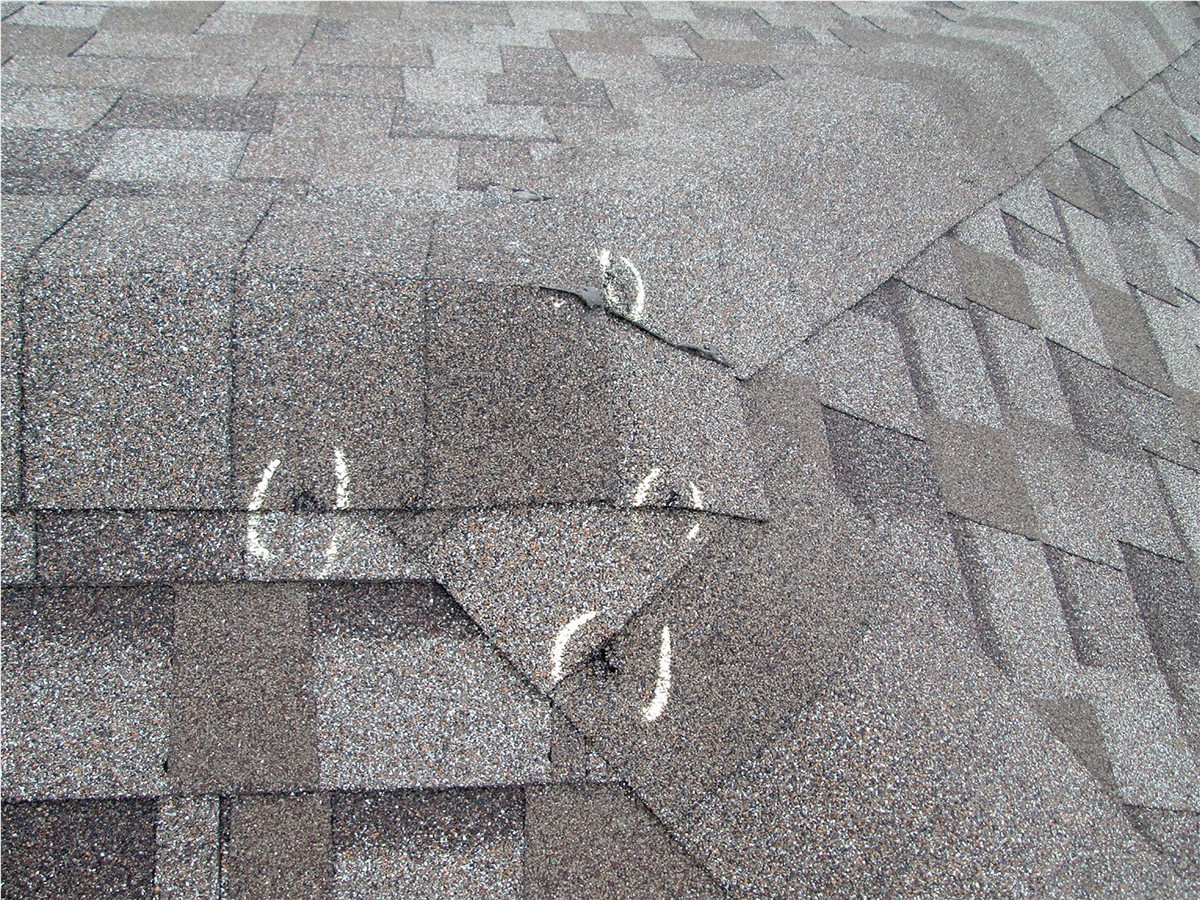
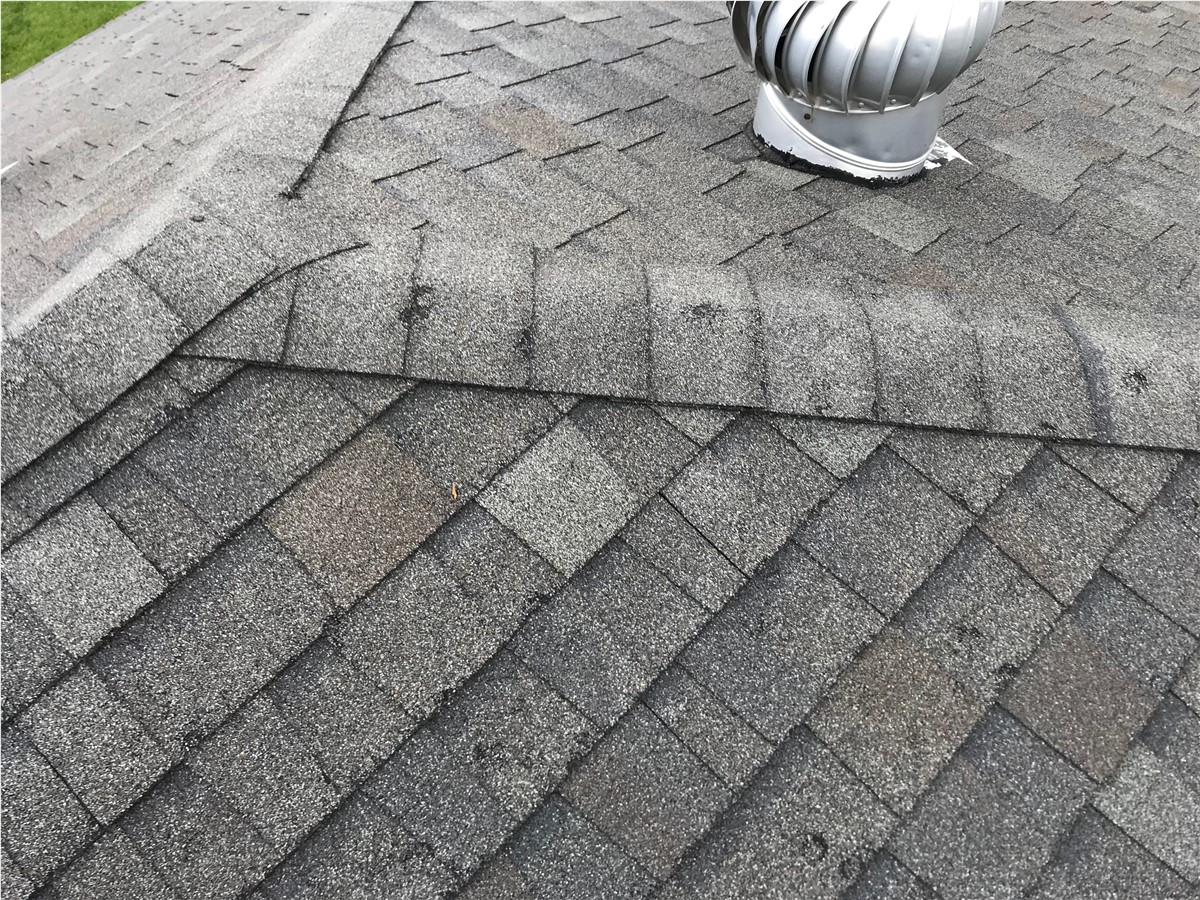
Severe weather can affect more than the shingles you can see from the driveway. High winds, heavy rainfall, fallen limbs, wind-driven rain, and debris can affect roofing, flashing, gutters, roof penetrations, siding, and other exterior components.
Some damage is obvious immediately after a storm. Other problems may not become noticeable until the next heavy rain exposes a leak.
Why Water Management Matters After a Cherry Hill Storm
Cherry Hill Township operates a municipal stormwater-management program designed around the movement and management of rainfall throughout the community. At the state level, New Jersey continues to evaluate increases in extreme precipitation.
For homeowners, roof drainage begins much earlier than the storm drain. Rain first has to move across the roofing system, through valleys and roof transitions, into properly functioning gutters, through downspouts, and away from vulnerable areas of the home.
After severe weather, it can therefore be useful to evaluate more than shingles.
Exterior Components That May Be Affected by a Storm
- Roof shingles
- Roof flashing
- Pipe collars and roof penetrations
- Ridge and ventilation components
- Gutters and downspouts
- Soffits and fascia
- Siding
- Exterior trim
Signs Your Roof May Have Storm Damage
- Missing shingles
- Lifted or displaced shingles
- Shingle damage from debris
- New water stains indoors
- Water entering the attic
- Damaged flashing
- Loose gutters or downspouts
- Branches or other debris on the roof
- Exterior siding damage that appeared after the same storm
What Should You Do After a Storm in Cherry Hill?
- Stay off the roof. Roofing surfaces can be wet, damaged, or unstable.
- Look from the ground. Check for missing materials, displaced gutters, debris, or visible exterior damage from a safe location.
- Check inside. Look for new ceiling stains, moisture, or attic leaks if the area is safely accessible.
- Document visible damage. Photographs can help create a record of the conditions you observed.
- Schedule a professional inspection. A roofer can evaluate areas that are difficult to assess safely from the ground.
- Review repair options. The appropriate response depends on the extent of the damage and the pre-storm condition of the roofing system.
Storm Damage Repair vs. Full Roof Replacement
A storm does not automatically mean a roof needs replacement.
Localized damage on an otherwise healthy roofing system may be repairable. A roof that already had widespread deterioration, recurring leaks, significant age, or extensive storm-related damage may require a broader solution.
The condition of the roof before the storm matters just as much as the event itself.
Insurance Documentation After Roof Damage
Homeowners dealing with storm damage may choose to contact their insurance carrier depending on the circumstances and their policy.
A professional inspection can help document visible exterior conditions, but the insurance carrier determines coverage based on the homeowner's policy, the cause of damage, and its own claim process.
Warner Exteriors can provide project information and documentation related to the roofing conditions and proposed work, but homeowners should rely on their carrier for decisions about coverage.
Storm Damage Throughout Cherry Hill
Warner Exteriors serves homeowners throughout Cherry Hill, including Barclay, Erlton, Greentree, Kingston Estates, Springdale, Ashland, Ellisburg, and surrounding neighborhoods.
If severe weather has affected your home, our nearby South Jersey team can inspect roofing and related exterior components and explain the repair or replacement options available.
Request a Cherry Hill Storm Damage Roof Inspection
If you notice missing shingles, leaks, displaced gutters, damaged siding, or other exterior changes after severe weather, do not wait for a small opening to become a larger water-intrusion problem.
Contact Warner Exteriors & Solar to request a storm damage roofing inspection in Cherry Hill, NJ.